What Is Digital Marketing? Complete Guide to Strategies, Trends & Success in 2026
Meta Description: Discover what digital marketing is, essential strategies, top trends for 2026, and how to succeed online. Learn SEO, social media, content marketing, AI, and more to grow your business.

Introduction
In today’s world, every business needs to reach customers online. But how do you do that effectively? Digital marketing is the answer.
Digital marketing is the practice of promoting products, services, or brands through digital channels like websites, social media, email, search engines, and mobile apps. It’s how businesses connect with customers in the digital age, build awareness, drive sales, and create lasting relationships.
Unlike traditional marketing (TV, radio, print), digital marketing is measurable, targeted, and flexible. You can track every click, see exactly who’s engaging with your content, and adjust your strategy in real-time. That’s why 91% of marketers now use digital marketing strategies, and the industry is expected to reach $1 trillion in value by 2030.
In this guide, you’ll discover what digital marketing is, the essential strategies you need to know, the top trends shaping 2026, tools that make it easier, common mistakes to avoid, and how to start your digital marketing journey. Whether you’re a business owner, marketer, or beginner, this complete guide will help you succeed online.
Let’s dive into the world of digital marketing.
What Is Digital Marketing?
Digital marketing (also called online marketing) is any marketing effort that uses electronic devices or the internet. It includes everything from posting on social media to running paid ads, sending emails to customers, optimizing your website for search engines, and creating content that attracts visitors.
Key Characteristics of Digital Marketing
| Feature | Description |
| Digital channels | Uses internet-based platforms (social media, email, search, websites) |
| Measurable | Track every metric: clicks, conversions, engagement, ROI |
| Targeted | Reach specific audiences based on demographics, behavior, interests |
| Flexible | Adjust campaigns instantly based on performance |
| Cost-effective | Often cheaper than traditional marketing, especially for small businesses |
| 24/7 availability | Your marketing works even when you’re asleep |
Digital marketing is essential because 81% of people research products online before buying, and 93% of online experiences begin with a search engine. If you’re not doing digital marketing, you’re missing out on the majority of your potential customers.
The 7 Core Types of Digital Marketing
Digital marketing isn’t one thing—it’s a collection of strategies that work together. Here are the 7 main types:
1. Search Engine Optimization (SEO)
What It Is:
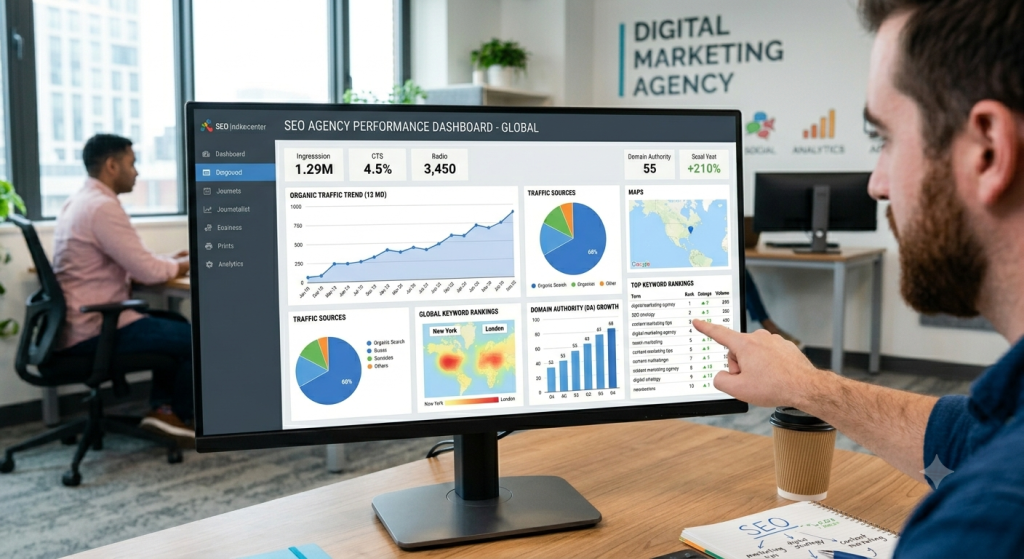
SEO is the practice of optimizing your website to rank higher in search engine results (like Google) for relevant keywords. When people search for products or services you offer, SEO helps them find you.
Why It Matters:
- 68% of online experiences start with search engines
- SEO brings organic (free) traffic that doesn’t require paid ads
- High-ranking websites get 33% more traffic than those below
Key SEO Strategies:
- Optimize content for relevant keywords
- Create high-quality, original content
- Improve website speed and mobile experience
- Build backlinks from authoritative sites
- Use proper meta tags, headers, and descriptions
Best For: Long-term growth, brand authority, free traffic
2. Content Marketing
What It Is:
Content marketing is creating and sharing valuable content (blogs, videos, infographics, podcasts) to attract and engage your target audience. Instead of directly selling, you educate, inform, or entertain.
Why It Matters:
- Content marketing costs 62% less than traditional marketing
- Businesses that blog get 55% more website visitors
- 70% of consumers prefer learning about companies through content
Key Content Marketing Strategies:
- Write blog posts that answer customer questions
- Create videos (YouTube, TikTok, Instagram)
- Develop infographics and visual content
- Publish case studies and whitepapers
- Start a podcast or newsletter
Best For: Building trust, educating customers, long-term engagement
3. Social Media Marketing
What It Is:
Social media marketing is using platforms like Instagram, Facebook, Twitter (X), LinkedIn, TikTok, and YouTube to promote your brand, engage with followers, and drive traffic or sales.
Why It Matters:
- 4.8 billion people use social media worldwide
- 54% of people research products on social media
- Social media drives 33% of all traffic to websites
Key Social Media Strategies:
- Post consistently (3–7 times per week)
- Create engaging content (videos, images, polls)
- Use hashtags strategically
- Engage with comments and followers
- Run paid social ads for targeted reach
- Build community through groups and discussions
Best For: Brand awareness, engagement, viral potential
4. Paid Advertising (PPC)
What It Is:
PPC (Pay-Per-Click) advertising is paying to display ads on search engines (Google Ads), social media (Facebook Ads), or other platforms. You pay only when someone clicks your ads.
Why It Matters:
- PPC brings immediate results (unlike SEO)
- Highly targeted (by location, demographics, interests)
- 65% of high-intent clicks go to paid ads
- You control budget and spending
Key PPC Strategies:
- Create compelling ad copy and visuals
- Use targeted keywords or audience segments
- Track conversions and optimize campaigns
- Test multiple ad variations
Best For: Fast results, targeted campaigns, boosting reach
5. Email Marketing
What It Is:
Email marketing is sending targeted messages to a list of subscribers to promote products, share updates, or nurture relationships.
Why It Matters:
- Email marketing has an average ROI of $36 for every $1 spent
- 81% of consumers prefer receiving promotional content via email
- Email drives 16% more conversions than any other channel
Key Email Marketing Strategies:
- Build a quality email list (don’t buy lists)
- Create personalized, relevant content
- Use compelling headlines and visuals
- Segment audiences for targeted messaging
- Automate email sequences (welcome series, abandoned cart)
Best For: Customer retention, conversions, building relationships
6. Influencer Marketing
What It Is:
Influencer marketing is partnering with individuals who have established credibility and audiences (influencers) to promote your brand, products, or services.
Why It Matters:
- 63% of consumers trust influencers more than brands
- Influencer marketing generates $5.20 for every $1 spent
- 90% of marketers say influencer content is effective
Key Influencer Marketing Strategies:
- Find influencers who align with your brand
- Choose based on engagement, not just follower count
- Create authentic partnerships (not forced ads)
- Use micro-influencers (10K–100K followers) for higher engagement
Best For: Building trust, reaching new audiences, viral potential
7. Analytics & Data Marketing
What It Is:
Analytics is measuring, tracking, and analyzing marketing performance using data. It helps you understand what’s working, what’s not, and where to improve.
Why It Matters:
- Data-driven companies are 5 times more likely to make faster decisions
- 84% of marketers use analytics to optimize campaigns
- Without analytics, you’re guessing instead of knowing
Key Analytics Strategies:
- Use tools like Google Analytics, Facebook Insights
- Track key metrics: traffic, conversions, ROI, engagement
- Set up conversion tracking
- Use data to make informed decisions
Best For: Optimization, decision-making, measuring success
Top Digital Marketing Trends for 2026
Digital marketing is constantly evolving. Here are the top trends shaping 2026 that you need to know:
1. AI Search Optimization (GEO)
What It Is:
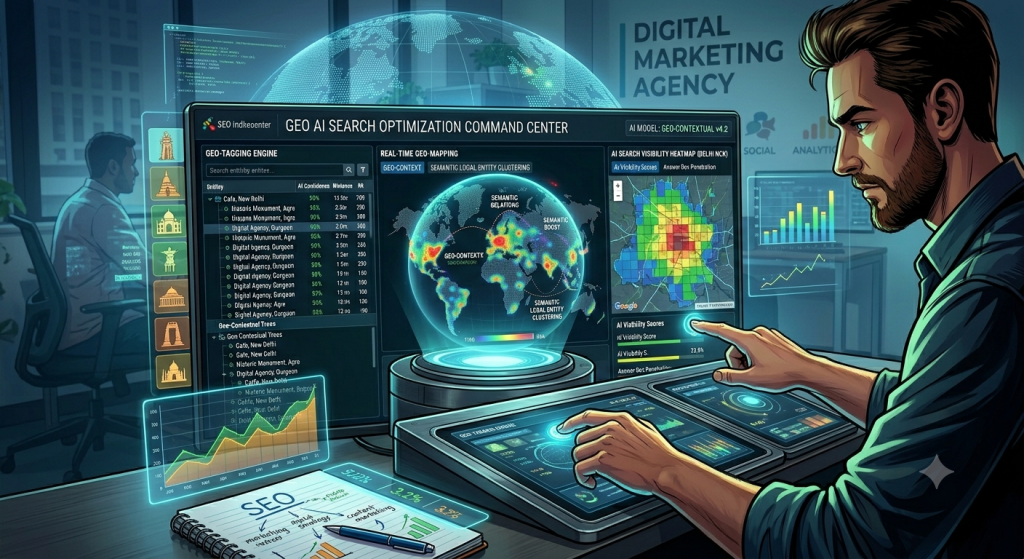
GEO (Generative Engine Optimization) is optimizing your content for AI-powered answer engines like Google’s AI Overviews, ChatGPT, and other LLM sources.
Why It Matters:
- 46% of marketers now use AI to scale creative
- Audiences are finding brands on AI summary lists, not just traditional search
- The entire search funnel has been reconstructed
Action: Optimize content for questions people ask AI, not just keywords.
2. AI-Powered Personalization
What It Is:
Using AI to create hyper-personalized experiences for each customer, from product recommendations to email content.
Why It Matters:
- 33% of marketers run AI across creative, media, and measurement
- Personalized emails deliver 6x higher transaction rates
- AI makes personalization scalable
Action: Use AI tools for content creation, email personalization, and customer segmentation.
3. Short-Form Video Content
What It Is:
Creating short videos (15–60 seconds) for platforms like TikTok, Instagram Reels, and YouTube Shorts.
Why It Matters:
- Short-form video has the highest engagement rate
- 73% of consumers prefer learning about products through short videos
- Algorithms favor video content
Action: Post 3–5 short videos per week on at least one platform.
4. Community Platforms Over Broadcast Channels
What It Is:
Building presence on participatory spaces like Reddit, Discord, and Substack instead of traditional social media.
Why It Matters:
- Participatory spaces replace broadcast channels as primary trust-building sites
- Reddit threads shape perception before mainstream coverage
- Real human interaction creates stronger connections
Action: Engage authentically in communities where your audience hangs out.
5. Authenticity Over Perfection
What It Is:
Creating genuine, human content instead of polished, corporate messaging.
Why It Matters:
- 95% of respondents test AI for creative production, but 42% classify approach as “initial testing”
- 3 in 7 respondents concerned AI-generated creative makes brands look same
- Consumers prefer authentic, relatable content
Action: Show real people, real stories, and behind-the-scenes content.
6. Organic Content & Cultural Relevance
What It Is:
Creating content that’s culturally relevant and genuinely engaging instead of relying only on paid media.
Why It Matters:
- Cultural relevance creates compounding advantages paid media can’t manufacture
- Paid media can’t buy dominance alone
- Brands winning with organic + relevance
Action: Create content that resonates with current culture and trends.
7. Privacy-First Marketing
What It Is:
Marketing strategies that respect user privacy and comply with data protection regulations (GDPR, CCPA).
Why It Matters:
- Consumers demand privacy transparency
- Regulations are tightening globally
- Consent-based personalization is the future
Action: Get explicit consent, be transparent about data use, and prioritize privacy.
Essential Digital Marketing Tools for 2026
Having the right tools makes digital marketing easier and more effective. Here are the must-have tools:
| Category | Best Tools |
| SEO | Google Analytics, Google Search Console, SEMrush, Ahrefs, Moz |
| Content | WordPress, Canva, Grammarly, HubSpot, Medium |
| Social Media | Buffer, Hootsuite, Later, Sprout Social, Meta Business Suite |
| Mailchimp, ConvertKit, Klaviyo, HubSpot, ActiveCampaign | |
| PPC | Google Ads, Facebook Ads Manager, Microsoft Ads |
| Analytics | Google Analytics 4, Google Data Studio, Tableau |
| AI Tools | ChatGPT, Jasper, Copy.ai, Midjourney, DALL-E |
Digital Marketing vs. Traditional Marketing
| Factor | Digital Marketing | Traditional Marketing |
| Cost | Lower ($100–$10K/month) | Higher ($5K–$1M+) |
| Targeting | Highly specific | Broad |
| Measurable | Yes (track everything) | No (guess estimates) |
| Flexibility | Adjust instantly | Fixed once published |
| Reach | Global | Local/regional |
| Engagement | Two-way (interactive) | One-way (passive) |
| Speed | Fast results | Slow results |
Digital marketing is more effective for most businesses today because it’s measurable, targeted, and cost-effective.
Common Digital Marketing Mistakes to Avoid
| Mistake | Why It’s Bad | Solution |
| No clear strategy | Wasted time and money | Define goals and plan before starting |
| Ignoring analytics | Can’t improve without data | Track metrics and analyze regularly |
| Too much focus on sales | Pushes customers away | Balance education with promotion |
| Not optimizing for mobile | 60% traffic is mobile | Ensure mobile-friendly experience |
| Inconsistent posting | Lost engagement | Create content calendar and stick to it |
| Buying email lists | Low quality, spam complaints | Build organic list slowly |
| Ignoring SEO | Won’t rank in search | Invest in SEO from the start |
| Copying competitors | No unique value | Focus on your unique strengths |
| Expecting instant results | Disappointment | Be patient, 6–12 months for SEO |
| Using AI without strategy | Generic, average content | Use AI as tool, not replacement |
How to Start Digital Marketing (Step-by-Step)
Step 1: Define Your Goals
What do you want? More traffic? Sales? Brand awareness? Email subscribers? Set clear, measurable goals.
Step 2: Identify Your Target Audience
Who are you marketing to? Age, location, interests, pain points? Create an audience profile.
Step 3: Choose Your Channels
Which channels fit your goals and audience? SEO? Social media? Email? PPC? Don’t try all at once—start with 1–2.
Step 4: Create Your Content
Develop content for your chosen channels. Blog posts, videos, social posts, emails. Make it valuable and relevant.
Step 5: Set Up Analytics
Install tracking tools (Google Analytics, social media insights). You need data to measure success.
Step 6: Launch & Optimize
Start your campaigns. Monitor performance weekly. Adjust based on what works. Optimize continuously.
Step 7: Scale Success
Once you find what works, scale it. Increase budget, expand to more channels, create more content.
Digital Marketing Skills to Learn in 2026
To succeed in digital marketing, learn these essential skills:
| Skill | Why It Matters |
| SEO | Essential for organic traffic |
| Content creation | Foundation of all marketing |
| Data analysis | Make informed decisions |
| Social media | Reach and engage audiences |
| Email marketing | Direct customer communication |
| Copywriting | Persuasive messaging |
| AI tools | Scale creative production |
| Video editing | Short-form video is dominant |
| Strategy | Plan and execute effectively |
Conclusion: Digital Marketing Is Your Future
Digital marketing is no longer optional—it’s essential for any business that wants to succeed today. With 4.8 billion social media users, 68% of online experiences starting with search, and 81% of people researching online before buying, digital marketing is where your customers are.
The best part? Digital marketing is accessible to everyone. You don’t need a huge budget or team. You can start small, learn the essential strategies (SEO, content, social media, email, PPC), track your results, and scale what works.
In 2026, focus on AI-powered personalization, short-form video, authenticity, and community building. These trends will dominate, and early adopters will win.
Your digital marketing journey starts now. Pick one strategy, create your first piece of content, and take action. Success comes from consistency, not perfection.